

Chemical Fertilizers, Contestations and Alternatives in South Africa, c. 1900–1990.
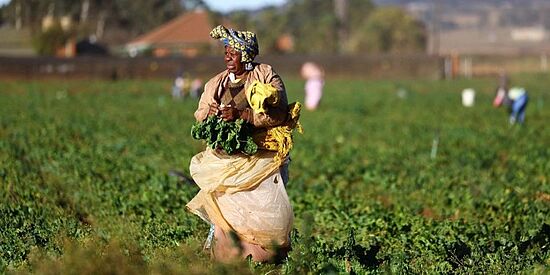
Image Credits: A farm worker at a farm in Johannesburg, South Africa, May 2025. © Reuters/Siphiwe Sibeko
My PhD research explores the history of chemical fertilizers in South Africa between the early twentieth century and the end of apartheid. While synthetic fertilizers became central to agricultural modernization across much of the world, their history in South Africa remains largely unexplored. I am interested in understanding how fertilizers transformed farming practices, shaped relationships between the state and agricultural producers, and became embedded within broader political, social, and environmental struggles. My research examines how chemical fertilizers were introduced, promoted, and contested from the formation of the Union of South Africa in 1910 through to the late apartheid period.
During these decades, South Africa experienced many changes in agriculture through the expansion of agricultural research institutions, extension services, and state-led programmes that encouraged scientific farming. These developments were closely linked to debates about what constituted “modern” agriculture and who should benefit from it. I will investigate how different visions of agricultural development were shaped by race, class, and gender, and how these distinctions influenced access to agricultural knowledge, state support, and farming inputs.
Methodologically, my research combines archival research with oral history. I will draw on records from government departments, agricultural research institutes, universities, farmers’ associations, agricultural journals, and extension services, alongside interviews with farmers, agricultural officials, extension officers, and educators. These sources will allow me to reconstruct both official policies and the lived experiences of those who adopted, rejected, or adapted chemical fertilizers in different agricultural settings.
This dissertation is part of the SNSF research project Feeding the Earth: Synthetic Fertilizers and the Remaking of Agriculture in the Nineteenth and Twentieth Centuries, led by Prof. Dr. Corey Ross.